


Yinglong Muscatel Oolong(Light Roasted)|銀龍蜜香烏龍(清香タイプ)
Yinlong – Taiwan's Hidden Local Tea Cultivar
Even among Taiwanese tea professionals, very few have heard of it.
Quietly cultivated in Mingjian Township, Nantou County, **Yinlong (Silver Dragon)** is truly one of Taiwan's best-kept tea secrets—a rare local cultivar known only to a handful of growers.


Yinlong is believed to have originated as a naturally occurring mutation discovered in a tea garden in Mingjian Township, Nantou County, Taiwan. According to local accounts, it is thought to be descended from **Chin-Shin-Oolong** and **TTES No. 17 "Bailu (White Egret)."** However, this lineage has never been confirmed through DNA analysis or other official research. The cultivar has not been formally registered or academically classified by the Taiwan Tea and Beverage Research Station (TBRS). As a result, Yinlong is currently regarded as a local landrace of Mingjian Township and is cultivated only on a very limited scale within the region.


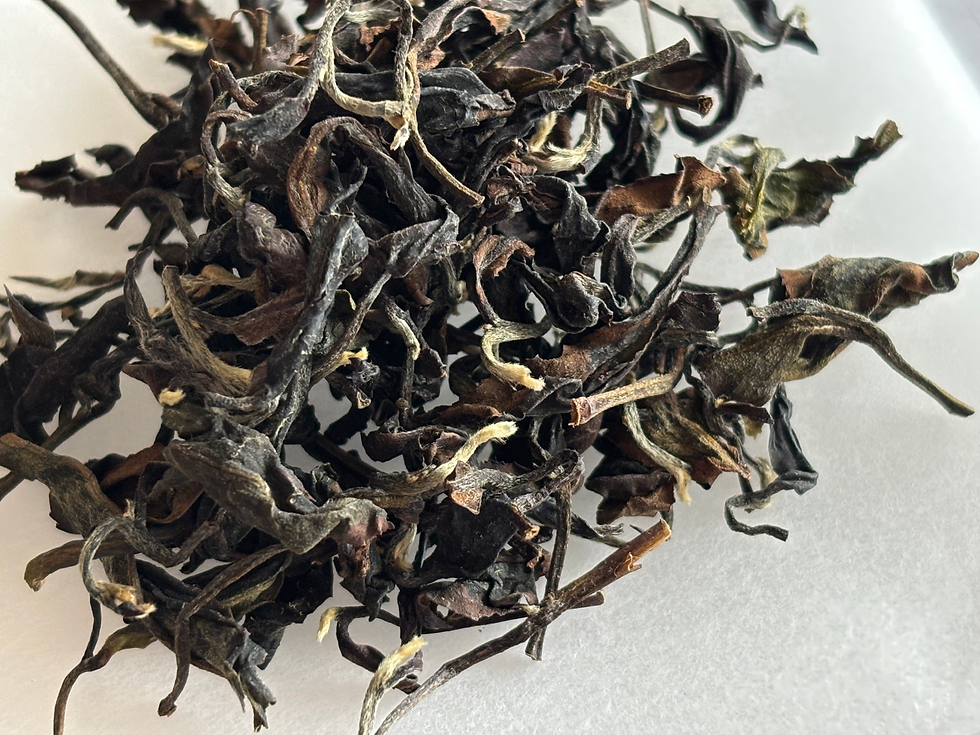
Yinlong combines the elegant floral fragrance characteristic of Chin-Shin-Oolong with the abundant white buds traditionally attributed to Bailu. These distinctive features are said to have inspired its name, **"Silver Dragon."** The cultivar is vigorous and highly resistant to pests and diseases. It is a small-leaf variety with a spreading growth habit, thick dark-green leaves, and adapts well to tea-growing areas ranging from low elevations to mid-altitude regions.


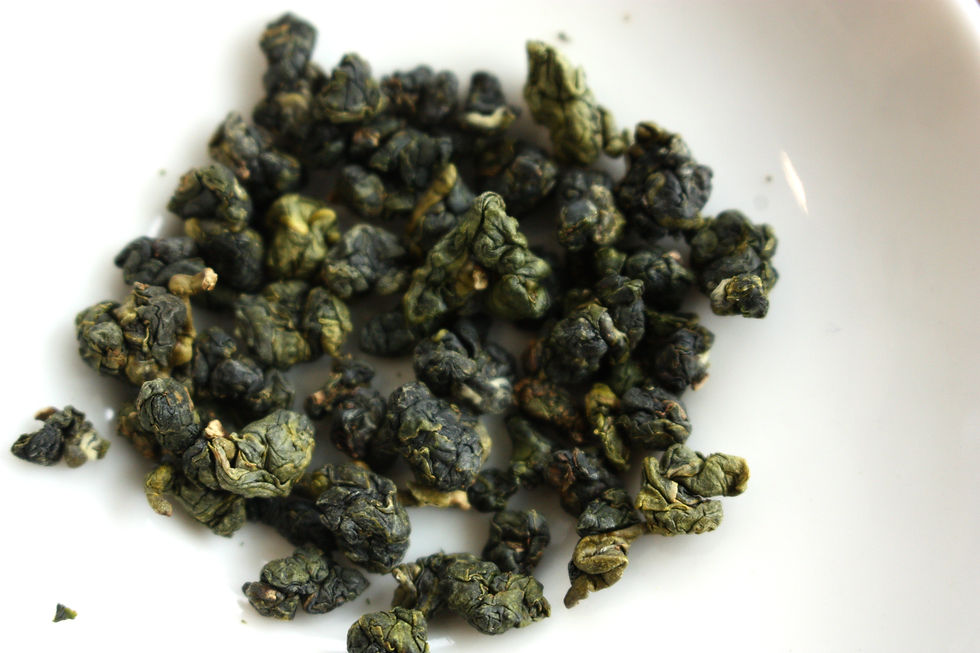
Beyond its disease resistance, Yinlong is valued for its pronounced floral aroma, high yield, and long harvesting season. It is relatively easy to cultivate and can be processed using various tea-making techniques. Today, however, it is most commonly crafted as a lightly oxidized, lightly roasted Fragrant type oolong tea.


The tea presented here is the **Spring 2025 harvest**. During the growing season, the tea maker observed the presence of the tea green leafhopper (*Jacobiasca formosana*) in the garden and chose to process this Yinlong as a **Honey Aroma Oolong**. The manufacturing process follows that of a typical high-mountain or fragrant type oolong tea. No high-temperature roasting is applied; instead, the tea is finished with gentle low-temperature drying to preserve the naturally sweet honey aroma created by the leafhopper's feeding.


Mingjian Township, centered around Songboling, is one of Taiwan's largest tea-producing regions. Situated on a plateau at elevations of approximately 200–400 meters, the area is well known for its highly developed mechanized harvesting, large production volume, and stable pricing. Tea produced here is widely marketed under the name **Songboling Evergreen Tea**, with cultivars such as **Sijichun (Four Seasons Spring)**, **Jhinshuan**, and **Cuiyu** dominating production. The region also serves as one of the primary suppliers of tea leaves for Taiwan's thriving bubble tea and beverage industry.


Jhinshuan and Cuiyu were improved cultivars released by the Taiwan Tea and Beverage Research Station (TBRS) during the 1980s. Sijichun, by contrast, was originally discovered as a local cultivar in Muzha, Taipei, and today is primarily cultivated in Mingjian Township.


Yinlong is another local cultivar born in Mingjian. Unlike Sijichun, however, it has neither a long cultivation history nor the same level of commercial productivity. As a result, only a small number of tea farmers continue to grow it. Even among those who study Taiwanese tea in depth, Yinlong remains largely unknown.


Aroma & Flavor: Muscat grape, rose, camellia, passion fruit, caramel, and sugarcane.
Processing: Plucking → Withering → Tossing → Kill-green (heat fixation) → Rolling → Ball Rolling (compression into tightly rolled leaves) → Drying
Origin: Mingjian Township, Nantou County, Taiwan
Tea Garden: Gongqi Tea Farm
Cultivar: Yinlong
Elevation: 400m
Oxidation: ★☆☆☆☆
Roasting: ★☆☆☆☆
Harvest Season: May


Brewing Guide
Tea Leaves : Water
5 g : 150 ml


Water Temperature
98°C


Steeping Time (Hot Brew)
* First infusion: 1 minute
* Second infusion: 1 minute
* Third infusion: 70 seconds
*For the best aromatic experience, the use of a traditional Taiwanese aroma cup set is recommended.*


Cold Brew
* 5 g of tea leaves
* 600 ml of cold water
* Refrigerate for 6–8 hours
International shipping fee
Shopping Guide
Returns & Refunds






%EF%BD%9C%E9%8A%80%E9%BE%8D%E8%9C%9C%E9%A6%99%E7%83%8F%E9%BE%8D(%E6%B8%85%E9%A6%99%E3%82%BF%E3%82%A4%E3%83%97))