


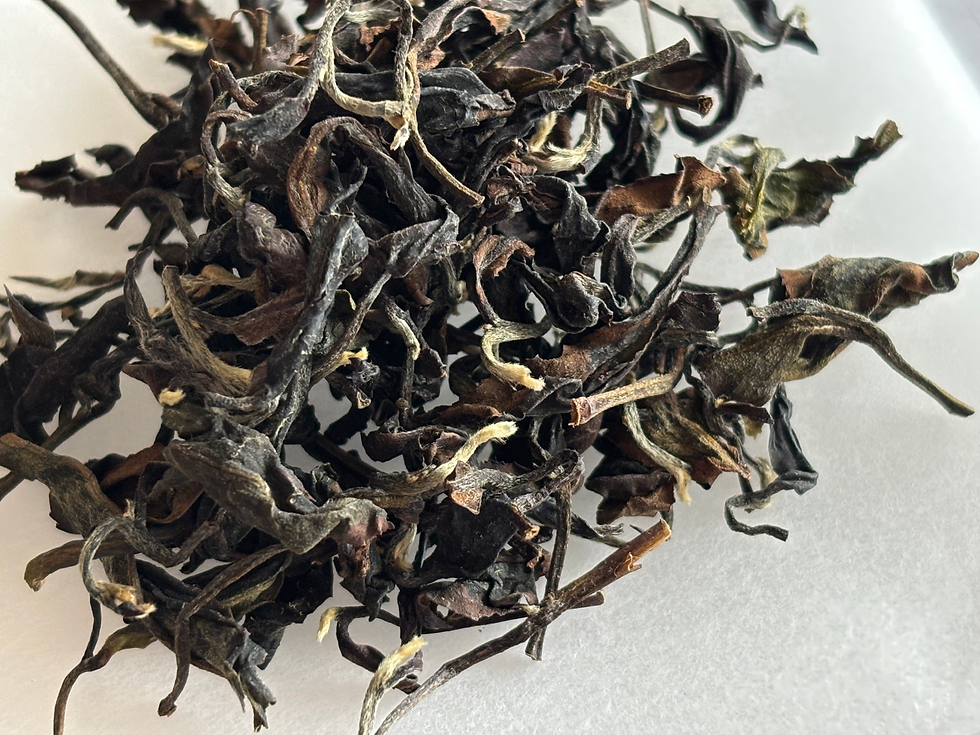
#020 Mingjian Sijichun Oolong Late Winter|名間四季春冬片(松柏長青茶)
April is the most important season for Taiwanese oolong tea. In Taiwan, April 5th is Qingming Festival, a day when people pay respects to their ancestors' graves. After that, it becomes the busy season for spring tea. As always, the weather quickly becomes warm during Qingming Festival, and it is often said to be a season when "freshness fills the air," which also promotes the rapid growth of plants. As a result, the production of spring tea is higher compared to other seasons.
However, in Taiwan, there is a tea tree variety called Sijichun that grows rapidly regardless of the season. This variety was accidentally discovered by a tea farmer named Zhang Wenhui in 1946 in his tea plantation in the "Muzha" area near Taipei. It grows faster than other tea trees, can be harvested at any time of the year, and has become popular among tea farmers due to its high annual yield of approximately 6 to 8 harvests. The parentage of this new variety is still unknown, as it resulted from the cross-pollination of different varieties through birds and wind. By propagating this variety through cuttings instead of seeds, the genetic traits have remained consistent, preserving the characteristics of the tea tree. The tea trees that maintain the variety's characteristics through cuttings are predominantly cultivated in the Muzha area and later in northern Taiwan, central Taiwan, and the Tongding area in Nantou. Recent studies have confirmed that this variety is a natural selection variant, and it was identified as a new variety not through research by the government's forestry institute but by private tea farmers in Taiwan.
It was named Sijichun because it can be harvested abundantly in any season. It is also known as "Early Spring Tea," "Unknown Spring," and "Six Seasons Spring" due to its ability to be harvested six times a year.
The Sijichun variety is characterized not only by its fast growth but also by its resistance to diseases, pests, and drought, making it a robust and versatile variety. Another significant characteristic of this variety is its intense aroma. It is commonly known as an "astonishing fragrance" and has a scent reminiscent of white flowers such as gardenia and jasmine. The aroma can vary depending on the origin and processing method. In this case, we are introducing a lightly fermented Sijichun tea from Nantou Mingjian Township, categorized as oolong tea and not roasted. The tea has a watercolor ranging from yellow-green to golden. It is a delicious tea that can be enjoyed warm or cold-brewed, offering a refreshing and rejuvenating experience.
The Sijichun included in the April issue set is made using 冬片 /dʊŋ piːɛn/, a tea leaf harvested between winter and spring. It is quite challenging to produce tea using 冬片 with other varieties, but it is readily available with Sijichun. During this period, there is a significant temperature difference between day and night, and sunlight is relatively weak. As a result, substances such as amino acids increase, reducing bitterness and enhancing sweetness and fragrance.
Aroma & Flavor: Osmanthus, ginger, grass, jasmine
Processing: Panning, rolling
Origin: Mingjian Township, Nantou County, Taiwan
Farm: 小茶米
Variety: Sijichun
Elevation: 400m
Fermentation: ★☆☆☆☆
Roasting: ★☆☆☆☆
Harvest Season: December to January
Notes: After opening, it is recommended to store it away from direct sunlight and humidity, and please consume it as soon as possible.
International shipping fee
Returns & Refunds
Shopping Guide


)