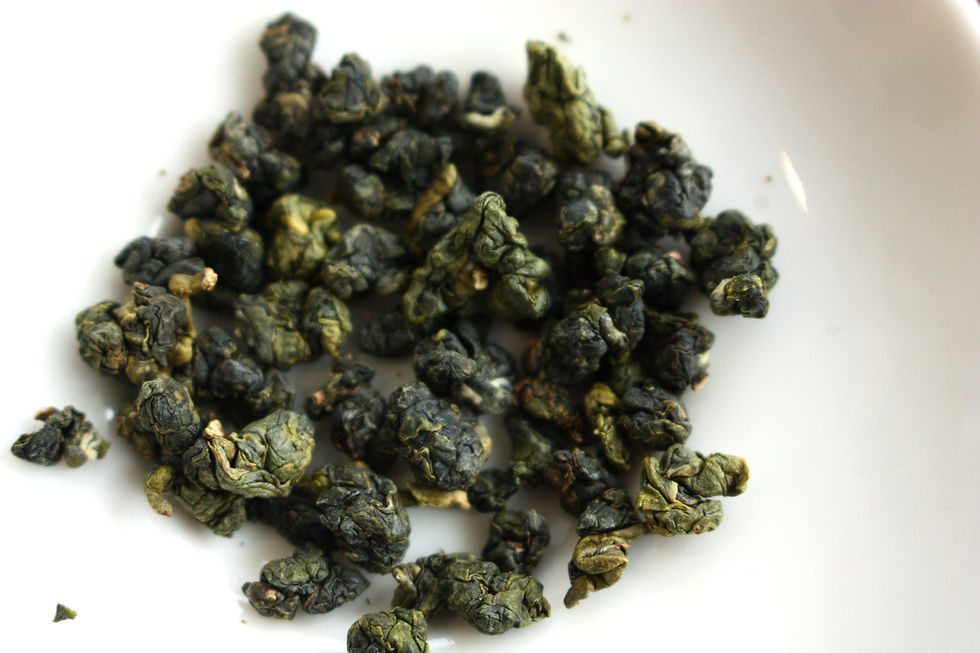
[Yang Ruilong] #032 Hsinchu Emei Oriental Beauty Tea | Emei Oriental Beauty
#032 Oriental Beauty Tea
Summer and autumn are the seasons for making Oriental Beauty tea. Like Honey Black Tea, Oriental Beauty tea is well known for its sweet, honey-like aroma.
Summer is a time when insects breed in abundance and insect damage is common, making it unsuitable for traditionally made oolong tea, and most of the fields are left fallow. However, when tea leaves are bitten by a type of insect called a planthopper, fermentation progresses from the damage, and a strangely sweet aroma emerges. This sweet aroma is actually a symbol of help emanating from the tea plant. The sweet scent attracts spiders that eat the planthopper, a strange behavior in which the plant asks for protection. Now, Oriental Beauty is a popular Taiwanese tea, both domestically and internationally, as a representative summer tea.
The first tea farmer to produce this tea, despite suffering severe insect damage, tried making it using the same method as oolong tea, thinking it would be a long shot. However, the areas bitten by insects had already begun to ferment, so even though it was made using the same method as regular oolong tea, the level of fermentation and oxidation was higher, resulting in a fermentation level closer to that of black tea. Although it is classified as oolong tea, its appearance and taste are significantly different from ordinary oolong tea.
*Fermentation levels: Baozhong tea and high mountain tea are 20% to 30%, Oriental Beauty tea is 60% to 70%, and black tea is 90% to 100%.
Oriental Beauty tea is also known by another name, Baihao Oolong. Baihao refers to the young tea leaves at the tips of the buds, which are harvested before they turn green. Because they have not yet developed catechins and enzymes, oxidation does not progress, and they do not turn black. If there are many new buds, the resulting tea will have a lot of white parts, and it is known to be a high-quality product. Originally called Baihao Oolong, the name Oriental Beauty has become the mainstream name over time.
There is a long-standing legend, though the exact date can no longer be determined, that a British merchant who was trading tea in Taiwan at the time presented Baihao Oolong tea to the Queen of England. The Queen was so pleased with it that she gazed intently at the tea leaves in the cup and exclaimed, "This is truly an Oriental Beauty!" Later, "Oriental Beauty" was translated into Chinese, becoming known as Dongfang Meiren tea (Oriental Beauty Tea).
Oriental Beauty is a type of tea made using a specific tea-making method. While Oriental Beauty tea is produced in various regions and using different tea varieties, Emei in Hsinchu County is the most famous production area for Oriental Beauty tea. The tea variety cultivated in this region is called Qingxin Damo, and it is the raw material for the highest quality Oriental Beauty tea. Furthermore, the artisans who specialize in making Oriental Beauty tea are concentrated in Emei.
The reason why Oriental Beauty tea is more expensive than other types of Taiwanese tea is,
① Planthoppers are needed, pesticides cannot be used, and production is low.
② The number of planthoppers and the amount of leaves they chew cannot be controlled.
③ Use as many new shoots as possible. Leaves smaller than 1 stem 2 leaves, or 1 stem 1 leaf, are of the highest quality and are produced in very limited quantities.
④ Because only one leaf per stem is used, the tea leaf picking process alone requires many experienced workers. It is all done by hand, not by machine.
⑤ Because it is made using damaged tea leaves, the manufacturing process is difficult, and there are very few artisans who can make the finest Oriental Beauty tea.
⑥ The highest quality Oriental Beauty tea is made from the Qingxin Damo variety. This variety is only cultivated in the northwestern part of Taiwan, specifically in the Taoyuan, Hsinchu, and Miaoli areas.
For the reasons mentioned above, the average price of Oriental Beauty tea is soaring year after year. The highest record was set in 2005 when one jin (600g) of this rare, top-grade Taiwanese oolong tea was auctioned for 1.01 million yuan.
The Oriental Beauty tea we received this time is the work of Mr. Yang of Yang Long Tea Garden in Emei, Hsinchu, who has been producing Oriental Beauty tea exclusively for many years. He is one of the top producers who competes for the Grand Prize and First Prize every year.
Since quantities are limited, don't miss this opportunity to try it out!
Aroma & Flavor | Lychee, Mango, Honey
Preparation method: Withering, pan-frying, settling and moistening (wrapped in a slightly damp cloth), drying.
Origin | Emei, Hsinchu
Farm|Yanglong Tea Garden
Variety|Seishin Daiju
Elevation | 150m
Fermentation | 70%
Roasting | 10%Production period: May to September
Tea leaves: water
4g: 150ml
Hot water temperature
98 degreesInfusion time (H)
First brew/30 seconds Second brew/45 seconds Third brew/60 seconds*Using Taiwanese double cups is recommended to fully enjoy the fragrance.
Cold brew (C)
Add 4g of tea leaves to 600ml of water and refrigerate for 6-8 hours.
About international shipping costs
We ship from Taiwan to Japan by air freight.
Purchase amount
Orders between NT$0 and NT$2,999: Shipping fee NT$100 (flat rate throughout Japan, including Okinawa)
Free shipping on orders over NT$3,000Returns & Refunds
We do not accept cancellations after an order has been placed, so please check the details carefully before confirming your order.
In the unlikely event that the delivered product is damaged, the wrong size, or otherwise defective, please contact us within 7 days of receiving the product. We will check the details and promptly replace it with a good quality product. Please contact us here for inquiries.
*Please note that we are closed on Saturdays, Sundays, and public holidays. We will respond to your inquiries in order from the next business day onwards. Thank you for your understanding.Shopping Guide
How much is the shipping fee?
Purchase amount
Orders between NT$0 and NT$2,999: Shipping fee NT$100 (flat rate throughout Japan, including Okinawa)
Free shipping on orders over NT$3,000
How many days will it take for the product to arrive?
If payment has been received, we will ship your order on the second business day after your order is placed. (Orders received on Friday will be shipped on Tuesday.)
Since the item will be shipped from Taiwan, it will take 7-10 days from the shipping date to arrive.
Please note that delivery may not be possible on the scheduled date in cases of incomplete order details, large orders, traffic conditions, natural disasters, or if the customer is not present at the time of delivery.
Can I specify the delivery date and time?
We sincerely apologize, but we cannot accept requests for specific delivery dates or times. Please contact your local delivery office using the tracking number provided in the email sent to you upon shipment.
What payment methods are available?
Currently, you can pay with PayPal or credit card through PayPal.
Is it possible to cancel an order after it has been placed?
We do not accept cancellations after an order has been placed, so please check the details carefully before confirming your order.
・If there is a problem with the delivered product: In the unlikely event that the delivered product is damaged, the wrong size, or otherwise defective, please contact us within 7 days of receiving the product. We will check the details and promptly replace it with a good product. Please contact us here.
*Please note that we are closed on Saturdays, Sundays, and public holidays. We will respond to your inquiries in order from the next business day onwards. Thank you for your understanding.