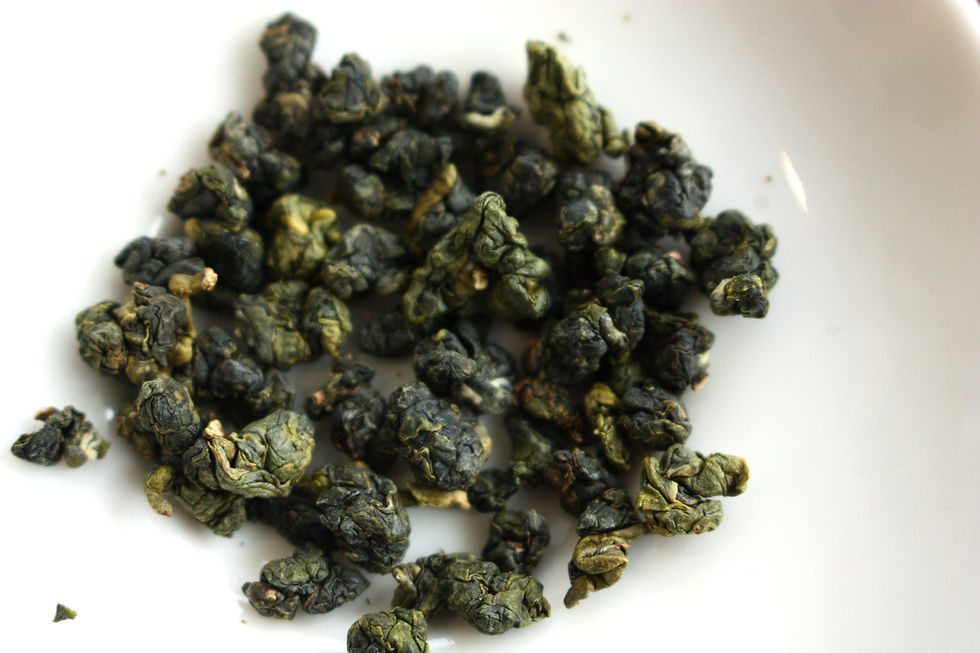
Jasmine Tea from Lin Hua Tai/台北・林華泰茉莉香片
Tea cultivation in northern Taiwan began in the 1860s, when immigrants from Fujian Province, China, brought tea plants and cultivation techniques with them. Before long, the British merchant John Dodd recognized the potential of Taiwanese tea and introduced it to Western markets under the name **"Formosa Oolong."** This marked the beginning of Taiwan's reputation as a tea-producing region on the global stage. Building upon Fujian's tea-making traditions while adapting them to Taiwan's unique climate and terroir, northern Taiwan gradually developed its own distinctive oolong tea culture.


At the time, all oolong tea was handcrafted. The leaves were moderately oxidized and traditionally finished over charcoal, producing a simple yet refined style of tea. However, following the global economic downturn of 1873, tea exports declined sharply. To address the growing surplus, tea producers began sending tea to Fuzhou, China, where it was scented with jasmine and gardenia flowers through a process known as **薰花** (flower scenting). This innovation became the origin of what is now known as **Scented Paochong Tea (Xiang Pian)** and marked a turning point in Taiwanese tea culture, establishing a lasting appreciation for fragrant teas.


In 1881, the large-scale production of scented Paochong tea began in Taipei's Dadaocheng district. By the 1890s, Taiwan's tea industry was built upon two major pillars: oolong tea and scented Paochong tea. As the delicate technique of repeatedly layering fresh blossoms with tea leaves continued to evolve, Taiwanese tea earned a distinguished reputation as a tea celebrated for its fragrance.


Founded in 1883, **Lin Hua Tai Tea House** is one of Taipei's oldest tea merchants and remains in operation today. The Lin family traces its roots to Anxi, Quanzhou in Fujian Province, China. After engaging in tea production in Wenshan and Shiding, Taiwan, they moved to Taipei and established themselves as tea merchants specializing in sourcing, sorting, and grading raw tea leaves. From its earliest days, the company has been involved in producing scented Paochong tea (Xiang Pian), exporting its teas primarily to Southeast Asia—including Indonesia and Thailand—as well as to Manchuria and Okinawa, contributing significantly to the international expansion of Taiwanese tea.


Today, Lin Hua Tai continues to use jasmine flowers harvested from its own carefully managed jasmine fields. By combining Paochong tea and green tea with fresh jasmine blossoms, the tea house faithfully recreates the same elegant aroma year after year.


**Jasmine Xiang Pian** is a classic jasmine tea that embodies the rich history of Taipei's tea industry. The purity of green tea, the gentle lingering sweetness of Paochong tea, and the graceful fragrance of jasmine come together to create a tea with remarkable clarity, elegance, and depth.


With every cup, you can experience both the world of scented Paochong tea that flourished in late nineteenth-century Taipei and the enduring craftsmanship of one of Taiwan's most historic tea merchants.


Taipei Lin Hua Tai Tea House – Jasmine Xiang Pian
Origin: Green Tea (Sanxia, New Taipei City), Paochong Tea (Wenshan, New Taipei City), Jasmine Flowers (Huatan, Changhua County)
Production Season: May (during the jasmine blooming season)
Produced by: Lin Hua Tai Tea Co., Ltd. / No. 193, Section 2, Chongqing North Road, Datong District, Taipei City, Taiwan


Brewing Guide
Tea Leaves : Water
5 g : 150 ml


Water Temperature
98°C


Steeping Time (Hot Brew)
* First infusion: 30 sec
* Second infusion: 40 sec
* Third infusion: 40 sec
*For the best aromatic experience, the use of a traditional Taiwanese aroma cup set is recommended.*


Cold Brew
* 5 g of tea leaves
* 600 ml of cold water
* Refrigerate for 6–8 hours
International shipping fee
Returns & Refunds
Shopping Guide