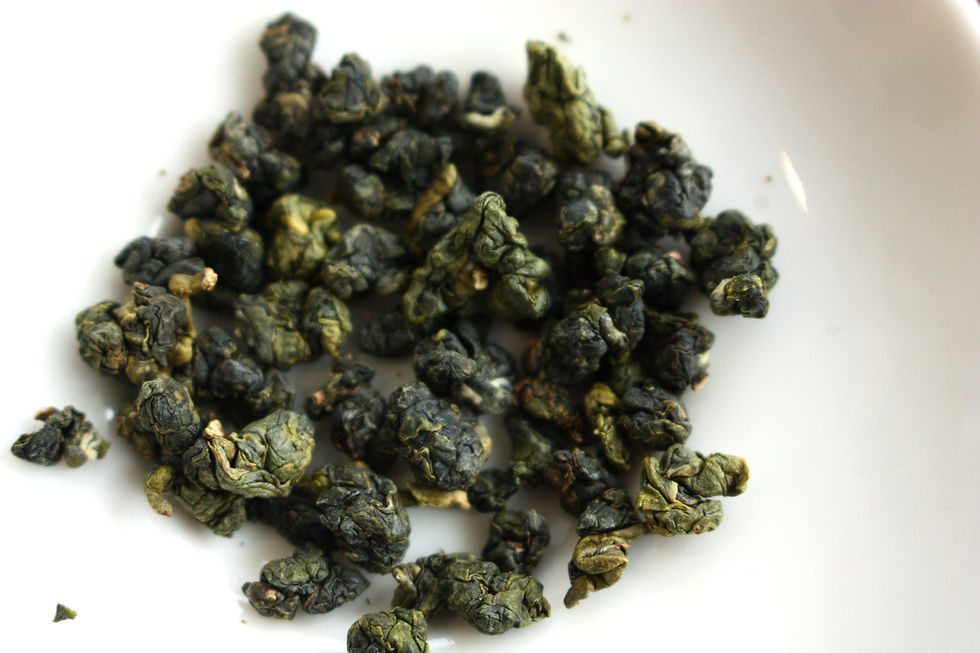
#035 TTES No.23 (Chiyun) Black Tea|祁韻紅茶
Taiwan’s **Qiyun Black Tea** is an elegant black tea crafted from the **Keemun tea cultivar**, originally from China, but carefully cultivated and adapted to Taiwan’s rich natural environment. Its fragrance reveals delicate notes of **rose, fresh green apple, and subtle woody aromas**, creating a refined and graceful tea experience with a pleasant lingering finish after every sip.
About Keemun Black Tea
**Keemun Black Tea** is a famous Chinese black tea produced in **Qimen County, Anhui Province, China**. Black teas produced in neighboring counties are classified separately as **Anhui Black Tea**, distinguishing them from authentic Keemun Black Tea. In Japan, it is commonly called *Keemun* or *Kimon*. It is recognized as the **only black tea among China's Ten Famous Teas**. Keemun Black Tea is sometimes described as the **"Burgundy wine of black tea"** and, together with **Darjeeling from India** and **Uva from Sri Lanka**, is considered one of the **world’s three great black teas**. When brewed, Keemun produces a brilliant reddish liquor with an elegant aroma featuring:
* Rose-like floral notes
* Apple-like fruitiness
* Young apricot sweetness
It also carries subtle roasted, pine-like aromas reminiscent of **Lapsang Souchong**, although its fragrance is not as intensely floral as Darjeeling. This distinctive character is known as **"Keemun aroma"**. Compared with Assam black tea, Keemun generally contains less caffeine, making it a smoother and more approachable tea.
Eighty Years of Research: The Keemun Cultivar Adapted to Taiwan
On September 5, 2018, Taiwan officially announced a new black tea cultivar: TTES No. 23 Qiyun.
Its story began in **1938**. At that time, Professor **Ryo Yamamoto of Taihoku Imperial University** collected seeds of the Keemun tea cultivar from the Qimen tea region of Anhui Province, China. These tea plants were introduced and cultivated at the **Yuchi Black Tea Experimental Station** under the Taiwan Governor-General’s Central Research Institute (the predecessor of today’s **Tea Research and Extension Station, Yuchi Branch**). After decades of observation, cultivation trials, and breeding research, a comparative evaluation was conducted between **2015 and 2017**, using **Chin-Shin-Oolong** as the control cultivar. Black tea produced from TTES No. 23 demonstrated outstanding characteristics:
* Bright orange-red liquor color
* Elegant and rich aroma
* Sweet floral and fruity notes
* Smooth and full-bodied flavor
* Pleasant astringency and excellent structure
Characteristics of TTES No. 23 Qiyun
According to the Tea and Beverage Research Station, the Keemun cultivar belongs to the **Chinese tea variety (Camellia sinensis var. sinensis)**, which has smaller leaves compared with the large-leaf Assam variety (**Camellia sinensis var. assamica**). In black tea evaluation, flavor complexity and taste quality are highly valued. However, Chinese tea varieties generally tend to produce lighter-bodied teas. TTES No. 23 is exceptional because it combines:
* A smooth and rich mouthfeel
* Distinct floral and fruity aromas
* Less aggressive astringency compared with Assam-type teas
Because of its balanced flavor and approachable character, Qiyun is expected to appeal particularly to younger tea drinkers.
Following the popularity of Taiwan’s famous black tea cultivars:
**Ruby 18 (TTES No. 18)**
**Hong Yun (TTES No. 21)**
Qiyun is regarded as a promising new cornerstone of Taiwan’s premium black tea market. In other words, Taiwan has successfully cultivated a descendant of one of the world’s greatest black tea cultivars. Although grown in a different land, **Qiyun carries the heritage of Keemun while expressing a unique Taiwanese character.**
Taiwan’s Semi-Ball-Shaped Yilan Tea
Yilan County has approximately **164 hectares of tea plantations**, distributed mainly across:
* Dongshan Township
* Sanxing Township
* Datong Township
* Jiaoxi Township
The main cultivars grown include:
* TTES No. 12 Jhinshuan
* TTES No. 13 Cuiyu
* Chin-Shin-Oolong
* Various traditional cultivars
These are used to produce semi-oxidized oolong teas and fully oxidized black teas. A unique characteristic of Yilan tea is its **semi-ball-shaped appearance**, created through a special rolling technique during processing.
Its shape lies between:
* The strip-shaped style of **Wenshen Paochong**
* The tightly rolled spherical style of **high mountain oolong**
Because of this shape, Yilan tea is often vacuum-packed, improving freshness and storage stability. Compared with strip-shaped teas such as Wenshen Paochong and Oriental Beauty, semi-ball-shaped tea leaves are less fragile and better suited for vacuum packaging. Compared with tightly rolled high mountain oolong, semi-ball-shaped leaves open more easily during brewing, allowing flavors and aromas to be extracted more effectively. Within Taiwan’s diverse tea culture, this semi-ball-shaped style holds a unique position. Although it may not frequently appear in the market, the next time you encounter a semi-ball-shaped tea, try asking whether it comes from Yilan—you may discover that even professional tea evaluators appreciate this distinctive style.
Third-Generation Tea Farmers: Li Wei & Huang Yu-Zhen
Twelve years ago, **Huang Yu-Zhen** married third-generation tea farmer **Li Wei** and returned to her husband’s hometown of Dongshan, Yilan. Together, they inherited the family tea gardens and tea factory, transforming the traditional tea farm into a new-generation tea brand called **Huajian Chayu.** They focus on tea-making methods that highlight natural floral aromas. Huang Yu-Zhen, the owner of the tea garden, specializes in creating floral teas by carefully blending and roasting tea with various flowers. They have also introduced modern equipment to improve tea quality and production efficiency. By processing tea leaves for elderly tea farmers in the region, they help support Yilan’s aging tea industry and preserve local tea-making traditions.
Aroma & Flavor: Rose, green apple, woody notes
Processing: Tea picking → Withering → Rolling → Full oxidation → Drying
Origin: Huajian Chayu Tea Garden, Dongshan Township, Yilan, Taiwan
Cultivar: Qiyun (TTES No. 23)
Elevation: 100 meters
Oxidation: ★★★★★ (Fully oxidized)
Roast Level: ★☆☆☆☆ (Light roast)
Harvest Season: May–July
Storage: After opening, avoid direct sunlight and humidity, and consume as soon as possible to preserve freshness.


**Tea-to-Water Ratio** (5 g tea leaves : 150 ml hot water)
**Water Temperature** 98°C (208°F)


**Steeping Time (Hot Brew)**
1st infusion: 1 min 20 sec
2nd infusion: 1 min 50 sec
3rd infusion: 2 min 50 sec


For the best appreciation of its elegant aroma, using a traditional Taiwanese aroma cup and tasting cup is recommended.


Cold Brew
* 5 g tea leaves
* 600 ml cold water
* Refrigerate for 6–8 hours
International shipping fee
Returns & Refunds
Shopping Guide