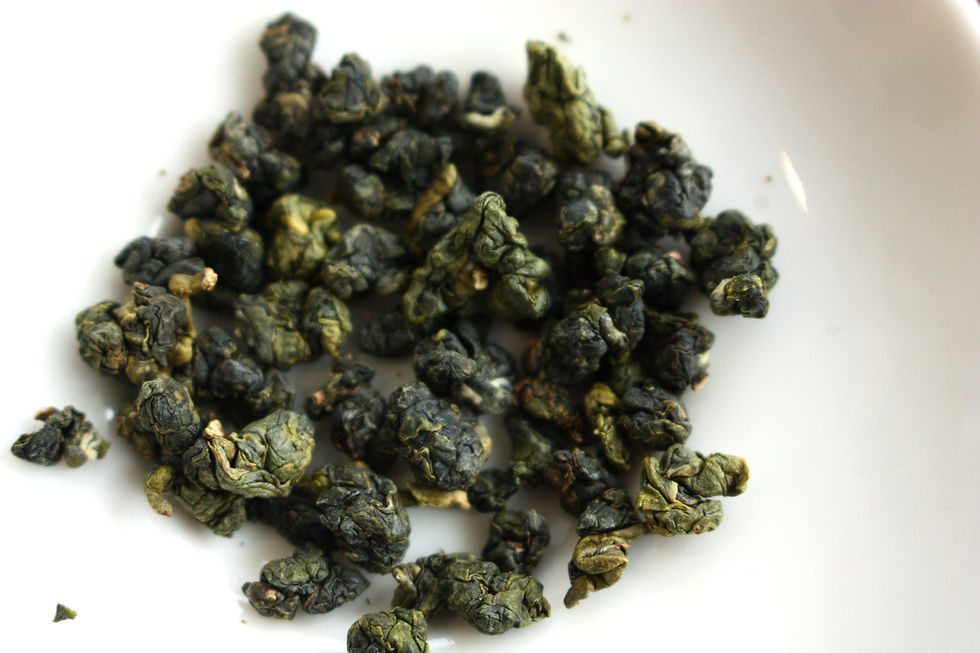
#013 Sanshia Biluochun Green Tea|三峡碧螺春緑茶
Located about 40 minutes by car from central Taipei, **Sanxia**, in western New Taipei City, is Taiwan's only remaining traditional green tea-producing region.
Tea cultivation in Sanxia began during the Qing Dynasty, when early settlers from Anxi, Fujian Province, introduced tea farming to the area. During the Japanese colonial period (1895–1945), the Japanese government actively promoted black tea production for export. With official support, the Mitsui Group expanded overseas markets, giving rise to the famous **Nitto Tea** brand. At its peak, black tea exports even surpassed those of oolong tea. During the same period, Sanxia also produced green tea used as the base tea for **xiang pian** (scented teas flavored with jasmine or osmanthus), which were primarily exported to Hong Kong.
The production of green tea intended to be enjoyed on its own did not begin until the 1950s. After World War II, officials of the Republic of China government, led by Chiang Kai-Shek, longed for famous Chinese green teas such as **Long-Chin** from Hangzhou, Zhejiang, and **Bi-Lo-Chung** from Dongting Mountain, Jiangsu. However, due to the Chinese Civil War and the resulting trade restrictions, importing tea from mainland China was impossible. As Sanxia already had an established green tea industry producing tea for scented teas, it naturally became the birthplace of Taiwan's own versions of Long-Chin and Bi-Lo-Chung.
Sanxia green tea flourished from the 1950s through the 1970s, when the region even established Taiwan's only fresh tea leaf trading market. Over time, however, demand declined as the first generation of mainland Chinese immigrants—its primary customer base—gradually passed away. Production has since fallen dramatically. Today, labor shortages pose an even greater challenge. In particular, the labor-intensive craftsmanship required for **Sanxia Long-Chin** has become increasingly difficult to sustain, and some believe that within the next decade, very few tea makers will still possess the skills to produce it. It is truly a rare tea worth experiencing while it is still available.
Today, oolong tea accounts for approximately 80% of Taiwan's total tea production. Green tea remains a small niche. During the Japanese colonial era, although cultivation techniques improved significantly, green tea production was intentionally limited to avoid competing with Japan's domestic tea industry. After the war, production briefly increased through pan-fired green tea exported to Morocco and steamed green tea exported to Japan. Since the 1970s, however, only two premium green teas for the domestic market have continued to be produced: **Sanxia Bi-Lo-Chung** and **Sanxia Long-Chin**.
Sanxia Bi-Lo-Chung is supported by annual green tea competitions organized by local governments and farmers' associations. In contrast, there is no official competition for Sanxia Long-Chin. As a result, Long-Chin is now produced only by a small number of traditional tea houses with long-standing, loyal customers.
Aroma & Flavor: Chestnut • Seaweed • Mineral Salinity • Mung Bean • Citrus • Ginger • Floral Notes
Processing: Hand-picked → Withering → Pan-firing → Rolling → Drying
Region: Sanxia, New Taipei City, Taiwan
Tea Garden: Tian Fang Tea Garden
Cultivar: Chin-Shin-Ganzai (青心柑仔)
Elevation: 200m
Harvest Seasons: March & October
Oxidation: ☆☆☆☆☆ (0%)
Roasting: ☆☆☆☆☆ (Unroasted)
Storage: Store in a cool, dry place away from direct sunlight and humidity. Once opened, consume as soon as possible to enjoy the tea at its best.


Tea Leaves : Water
5g : 150ml


Water Temperature
80°C


Steeping Time(H)
1st: 30 sec
2nd: 30 sec
3rd: 40 sec
*For the best aromatic experience, the use of a traditional Taiwanese aroma cup set is recommended.*


Cold Brew
* 5g of tea leaves
* 600ml of cold water
* Refrigerate for 6–8 hours
International shipping fee
Returns & Refunds
Shopping Guide