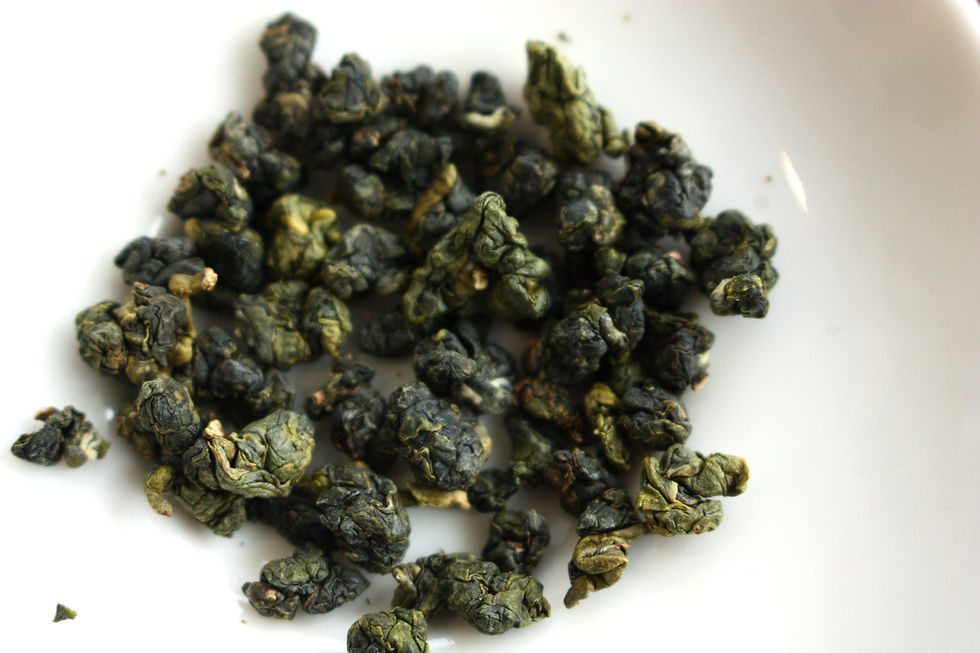
Alishan TTES No.12 (Jhinhsuan) Milky Oolong|阿里山金萱烏龍茶
The Birth and Evolution of Taiwan High Mountain Tea
Tea cultivation in Taiwan gradually expanded from the northern regions toward central and southern Taiwan. In its early days, tea gardens were primarily established on low- to mid-elevation hillsides and mountainous areas. From the mid-1970s onward, cultivation began moving to elevations above 1,000 meters. It was during this period that the oolong tea now known as **Taiwan High Mountain Tea** was born. The cool mountain climate, frequent morning and evening mist, and shorter hours of sunlight naturally suppress the formation of bitter catechins while promoting the accumulation of amino acids such as theanine and soluble nitrogen compounds, which contribute to sweetness and umami. As a result, the tea leaves become tender, thick, and rich in pectin. Once processed, the leaves display a vibrant emerald-green color, offering a smooth, mellow mouthfeel with a pure and elegant aroma—qualities that have made High Mountain Tea one of the most distinctive styles of Taiwanese oolong.
Alishan: The Birthplace of High Mountain Tea
The Meishan area of Alishan in Chiayi County is widely regarded as the birthplace of Taiwan High Mountain Tea. During the 1970s, Chin-Shin-Oolong tea bushes were first planted at elevations exceeding 1,000 meters. In the 1980s, the lightly oxidized fragrant type oolong became established, giving rise to the now-famous **Alishan Oolong Tea**, which has become synonymous with Taiwan High Mountain Tea. The region has also nurtured many outstanding tea masters and has since earned renewed recognition as the "Capital of High Mountain Tea." Today, tea gardens can be found at elevations above 1,000 meters throughout Chiayi County, Nantou County, Taichung City, Miaoli County, Hsinchu County, and Taoyuan City, primarily along the Central Mountain Range and the Alishan Mountain Range. Taiwan now has more than 6,600 hectares of High Mountain Tea plantations, accounting for over half of the nation's total tea-growing area.
Cultivar Development and the Rise of Jhinshuan
Taiwan's tea industry has long benefited from the development of improved tea cultivars. Among the most important is **TTES No. 12**, better known as **Jhinshuan**. Research on this cultivar began in 1938 during the Japanese colonial period, and it was officially registered in 1981. Jhinshuan is a cross between TTES No. 8 and Yingzhi Hongxin. Thanks to its high yield and vigorous growth, it is suitable for producing Paochong tea, High Mountain Tea, black tea, and many other tea styles. Today, it is one of the most widely cultivated tea varieties in Taiwan. When crafted into oolong tea, Jhinshuan develops its signature "milky" aroma. More precisely, however, it is perhaps best described as a soft, natural fragrance reminiscent of fresh cream rather than artificial milk. Jhinshuan grown in Alishan typically undergoes slightly higher oxidation and is harvested at a greater leaf maturity, resulting in a fuller-bodied liquor. Unlike teas from even higher elevations that emphasize a crisp, cooling freshness, Alishan Jhinshuan offers a classic flavor profile with a comforting sense of nostalgia.
Craftsmanship Behind High Mountain Tea
Taiwan High Mountain Tea is also distinguished by its production methods. In addition to the withering and shaking techniques shared with Wenshen Paochong Tea, it incorporates the **團揉** (ball-rolling) technique inherited from Tongding Oolong. This rolling process tightly shapes the leaves into compact spheres, creating an attractive appearance while enhancing the tea's aromatic complexity. Among all processing steps, withering and shaking are particularly critical, as they develop the tea's signature floral fragrance.
A New Appreciation for High Mountain Tea
Throughout its history, Taiwan High Mountain Tea has experienced several turning points. In ultra-high elevation regions such as Lishan and Dayuling, where tea is cultivated above 2,000 meters, the cool climate can inhibit oxidation, making it more difficult to develop the characteristic aroma associated with oolong tea. As a result, the long-held belief that "the higher the elevation, the better the tea" has gradually been reconsidered. Increasingly, attention is being placed not only on elevation and rarity, but also on flavor balance and sustainable cultivation. In 2019, Chiayi County launched its "High Mountain Tea Capital" rebranding initiative, promoting tea-making competitions and nurturing a new generation of tea masters. The government has also approved the establishment of a national High Mountain Tea Research Institute in Meishan Township, Alishan Tea District, reaffirming Alishan's position as the birthplace of Taiwan High Mountain Tea.
Alishan Jhinshuan — A Return to the Origins
Alishan Jhinshuan has once again gained recognition for its remarkable balance of aroma and flavor. Its fragrance is gentle and floral, complemented by subtle buttery and creamy notes, making it a tea that truly embodies the essence of Taiwan High Mountain Tea. With mature leaves, carefully controlled oxidation, and a rich, full-bodied character, Alishan Jhinshuan offers both the reassuring heritage of Taiwan High Mountain Tea and the refinement of modern tea craftsmanship. It is a cup that beautifully reflects the harmony between nature and human expertise.
Ruifeng Dayao(瑞峰大窯) Tea Garden & Tea Factory
Located at an elevation of **1,311 meters**, Ruifeng Dayao Tea Garden enjoys an average annual temperature below **20°C** and is enveloped in mountain mist throughout the mornings and evenings. With over **40 years of tea-making experience**, every stage of production—from hand-picking to final drying—is carried out with meticulous attention to detail. The tea garden, tea farmers, pickers, and tea masters work closely together to ensure every step of the complex manufacturing process is executed to the highest standards. The tea factory has earned top honors in Taiwan's prestigious tea competitions, including:
- Grand Prize (1st Place) – 2024 Winter *Taiwan Alishan Tea Way – Meishan Cold Dew High Mountain Premium Tea Evaluation Competition*
- Grand Prize (1st Place) – 2023 Spring *Meishan High Mountain Premium Tea Evaluation Competition*
Aroma & Flavor: Milky • Butter • Osmanthus
Processing: Pan-fired (Sha Qing), Ball-rolled (Tuan Rou)
Origin: Meishan Township, Alishan Tea District
Tea Garden: Ruifeng Dayao Tea Garden
Cultivar: Jhinshuan (TTES No. 12)
Elevation: 1,311m
Oxidation: ★★★☆☆
Roasting: ★☆☆☆☆
Harvest Seasons: April, October
Storage: After opening, store the tea away from direct sunlight and humidity, and consume it as soon as possible for the best flavor.
Tea Leaves : Water (5g : 150ml)
Water Temperature: 98°C
Steeping Time
1st Infusion: 1 min 30 sec
2nd Infusion: 1 min 45 sec
3rd Infusion: 2 min
To fully appreciate the tea's aroma, using a traditional Taiwanese aroma cup set is recommended.
Cold Brew
Use **5 g** of tea leaves with **600 ml** of cold water, and refrigerate for **6–8 hours**.
International shipping fee
Returns & Refunds
Shopping Guide